A new mixed reality training system is now in use in our fast jet training pipeline, marking a major step forward for the UK’s Military Flying Training System (UKMFTS) and demonstrating how Ascent, Defence Equipment & Support (DE&S), 22 Group and Lockheed Martin are working together to deliver at pace and value.
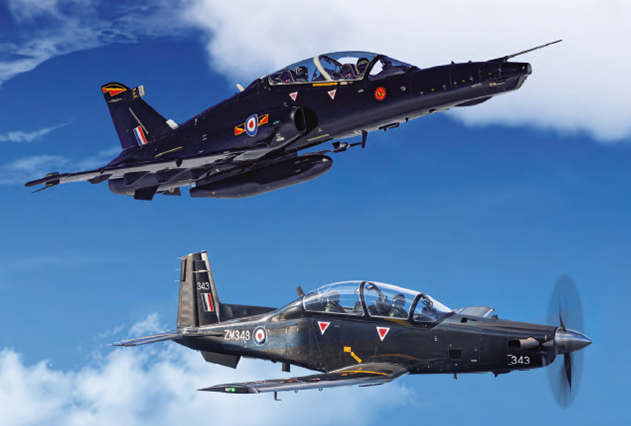
Delivered on time, within budget, and through cross industry-defence collaboration, Fast Jet Transformation Phase 1 has upgraded 11 synthetic training devices across the Hawk and Texan fleets. The result is a step-change in how future fast jet pilots learn and refine key flying skills, before they are assessed in a live aircraft.
It is not about replacing live flying – it’s about maximising the quality of each airborne sortie, improving trainee preparedness, and driving down the number of re-fly hours needed to achieve the output standard required from advanced fast jet training. With demand for frontline pilots increasing and live flying hours constrained, the impact is significant.
“Collaboration, underpinned by trust and transparency, was the foundation stone of Phase 1. The results speak for themselves: expectations exceeded, on time and under budget. The Enterprise can be justifiably proud of its achievements.”
Chloe Barker, Ascent Managing Director
Delivering at pace
The programme is a model of agile procurement. Using a ‘fly–fix–fly’ approach, industry engineers and instructors at RAF Valley rapidly iterate device capability. Fixes for issues raised during training sessions were routinely coded, tested and rolled out within 24 hours — a delivery rhythm made possible by empowered teams, clear governance and shared commitment across all partners.
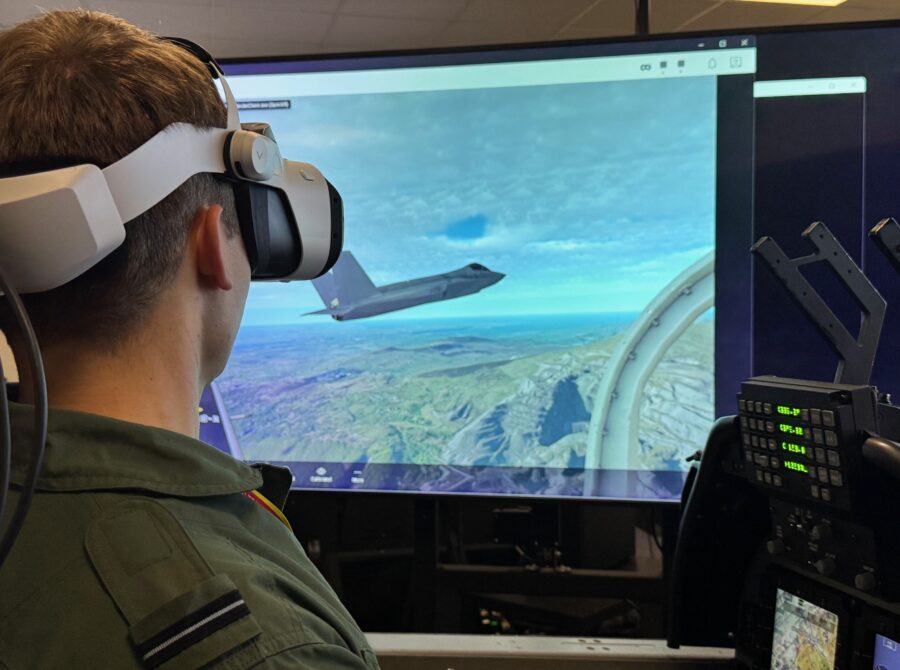
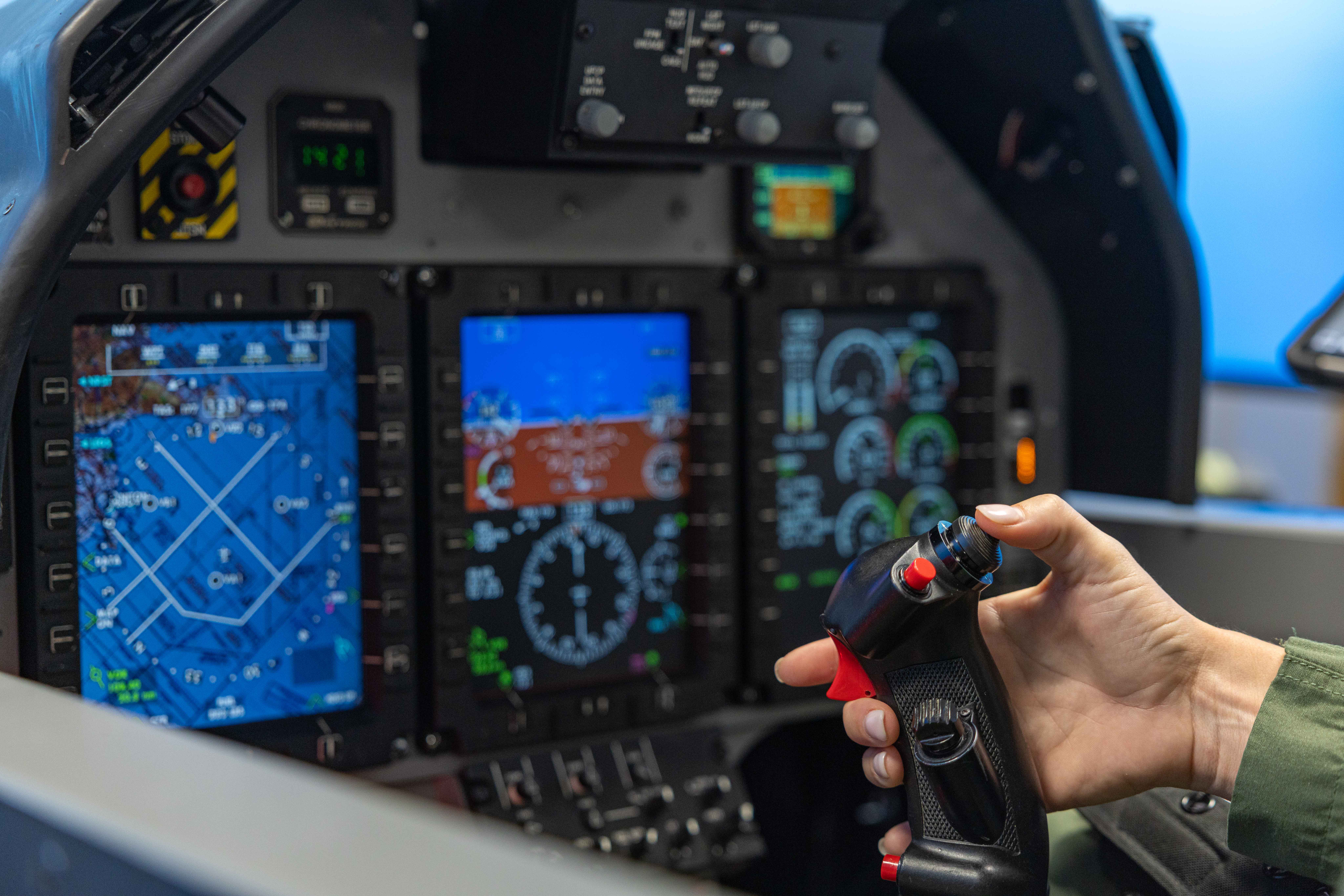
The centrepiece of the upgrade is the integration of the latest Varjo mixed reality headsets, which project high‑fidelity external visuals, while allowing trainees to look down and see the real cockpit, their own hands and all physical controls. For the first time, trainees can practise circuits, visual manoeuvres, formation admin and low‑level navigation with realistic depth perception and 360-degree awareness.
Smaller footprint, bigger impact
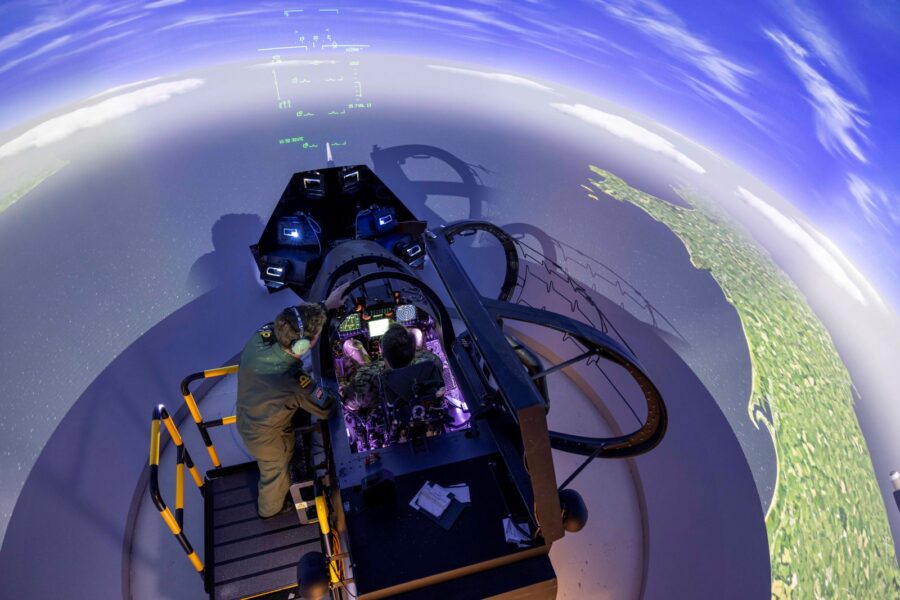
The new training devices require only 10–20% of the physical space of legacy dome simulators and cost around 10% as much to build. This dramatically reduces both infrastructure footprint and through-life costs. Crucially, this compact design means multiple devices can be installed in standard rooms, enabling more trainees to access high-grade training at the point of need — a major enabler for throughput. 22 Group analysis demonstrates the anticipated benefits:
Up to two more pilots to the front line annually
Up to £4m per year cost saving in outsourced training
An estimated £28m through-contract saving across FY26/27–FY32/33
Phase 2 and beyond
Building on the momentum of Phase 1, the programme will move forward with a twin‑stick mixed reality simulator aimed at strengthening the training pipeline and supporting faster, more agile instructor development.
The Technical Advisory Committee is already trialling further enhancements — from next‑generation image rendering to upgraded force‑feedback and smarter debriefing tools — ensuring UKMFTS remains at the forefront of innovative, rapid capability development.
Image: Crown Copyright